← Back to all One Page Business Stories

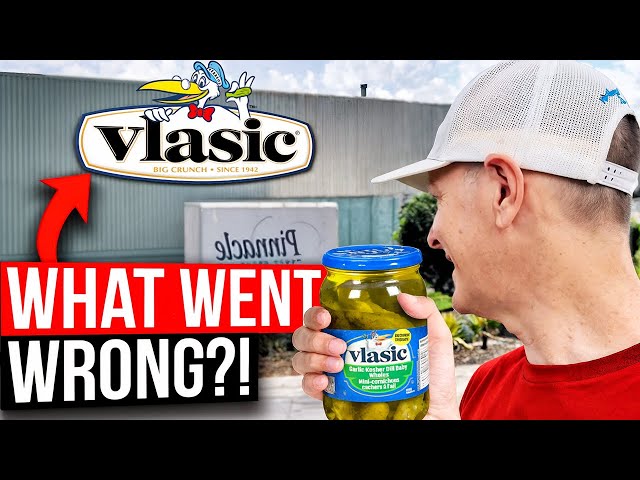
The rise and fall of Vlasic Pickles: How a $3 deal led to bankruptcy

A pickle empire with 36% market share went bankrupt in 3 years — killed by a $2.97 gallon jar at Walmart.

By The Numbers

$200M
peak annual sales
$500M
debt at spinout
$195M
bankruptcy sale price

What They Nailed Early

Bob Vlasic understood that advertising works when competitors didn't. Spent more on marketing than all pickle rivals combined. Built a premium brand from a commodity — hit 26% market share and $100M in sales by 1977.

What Changed

Campbell spun out Vlasic with $500M in debt to pay themselves a dividend, installing a first-time CEO into a turnaround. Desperate for growth to service debt and please shareholders, Vlasic launched a $2.97 gallon jar promotion with Walmart. It torched margins, eroded the premium brand, and made them entirely dependent on one buyer.

Where it Landed

Chapter 11 bankruptcy in January 2001, just 3 years after the Walmart deal. Sold to rival Heinz for $195M — pennies on the dollar. Brand survives today but as a cautionary tale.

The Principles

1. 
Growth at the wrong margin kills. Vlasic chased volume with Walmart but made zero profit — just replaced high-margin sales with break-even jars.
2. 
Debt creates perverse incentives. The $500M burden forced short-term decisions that destroyed long-term brand value to satisfy quarterly pressures.
3. 
Customer concentration is existential risk. Over 30% of sales through one buyer meant Walmart had veto power — and they used it ruthlessly.

Builder's Takeaway

3 warning signs your growth strategy is actually a death spiral:
• 
If your biggest customer is unprofitable, you're building a house of cards
• 
Premium brands die fast when you train customers to expect discount pricing
• 
Debt magnifies mistakes — turnarounds need cash cushion, not interest payments
Want the whole story? → Watch this on YouTube