← Back to all One Page Business Stories

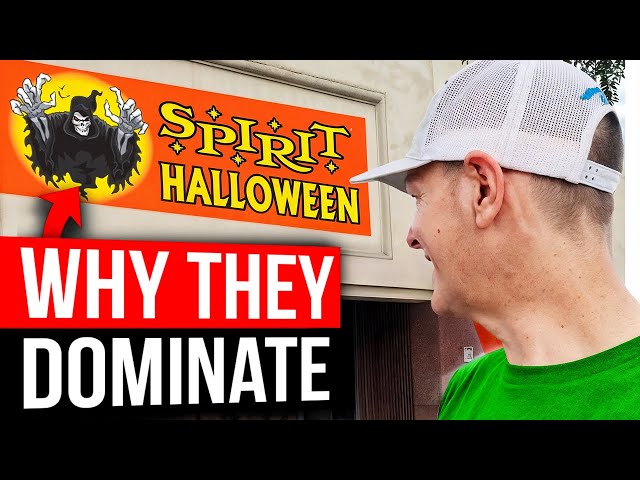
The rise of Spirit Halloween: How a pop-up beat Amazon and Walmart

A pop-up costume chain that only opens for 6 weeks a year now sells 1 out of every 6 Halloween costumes in America — and beat Walmart, Target, and Amazon doing it.

By The Numbers

1,500
stores opened annually
$600M
annual revenue today
1 in 6
costumes sold in America

What They Nailed Early

Founder Joe Marver cracked the model: open only for Halloween, avoid year-round rent, and use scale to buy direct from factories. By the late '90s, Spirit had 60 stores and pricing mom-and-pops couldn't match.

What Changed

Spencer Gifts bought Spirit and brought the capital to scale the machine. They built a 14-person real estate team to lock down temporary leases, went direct to factories for exclusive designs, and leaned into experience over price. Party City overextended and went bankrupt. Walmart and Target couldn't match the depth.

Where it Landed

✓ Over 1,500 stores. $600M+ business. Dominates the pop-up Halloween category with 1 in 6 costumes sold. Still winning by staying focused on their niche.

The Principles

1. 
Scale unlocks pricing power. Direct factory buying let Spirit undercut competitors who relied on domestic wholesalers by 30%+.
2. 
Depth beats breadth in experiential retail. 30 aisles of costumes and 25 types of fake blood create selection Amazon can't replicate.
3. 
Play your own game, not theirs. Spirit ignored year-round retail and owned the 6-week pop-up model competitors couldn't copy profitably.

Builder's Takeaway

If you're building a niche retail play, remember:
• 
Own the category through depth — make your selection so deep competitors can't match it
• 
Turn constraints into moats — seasonal-only avoided rent wars and capital traps
• 
Experience is the wedge against e-commerce — try-ons, nerdy staff, and installations win procrastinators
Want the whole story? → Watch this on YouTube