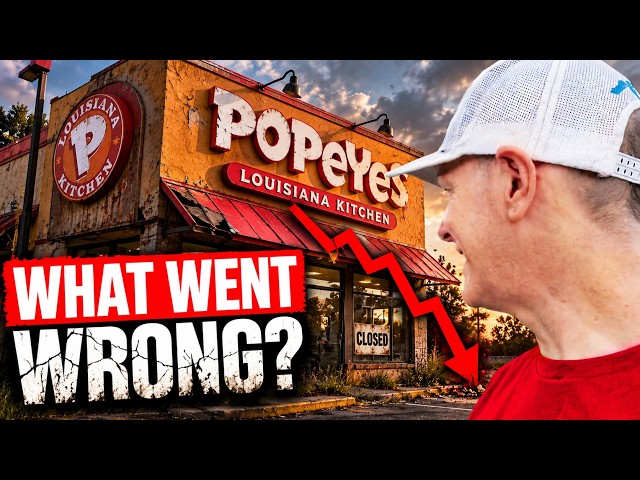
The chicken chain that went viral with a $4 sandwich and sparked $65 million in free buzz — now watching franchisees declare bankruptcy while headquarters reports record profits.
Built a differentiated Creole-spiced chicken recipe that tasted unlike anything else. Rode the tailwind of rising chicken consumption while KFC stumbled. Hit 500 locations by 1985 as number three chicken chain.
What Changed
3G Capital bought Popeyes for $1.7B in 2017, moved HQ to Miami, cycled through four CEOs, and applied their cost-cutting playbook. The 2019 viral chicken sandwich created a temporary boom, but competition from McDonald's, Wendy's, and Raising Canes flooded the market. Price wars to compete squeezed franchisee margins while headquarters collected royalties off sales, not profits.
Where it Landed
Same store sales down six straight quarters through 2025. Major franchisee with 150+ locations declared bankruptcy owing $130M. Locations selling for $110K each in fire sales. Corporate forced to buy back failed stores, breaking the capital-light model.
The Principles
1.
Franchisee profitability isn't optional. When headquarters optimizes for royalties while franchisees bleed on margins, the whole system collapses.
2.
Viral moments aren't moats. A $65M buzz from one tweet doesn't protect you when McDonald's and Wendy's copy your sandwich in six months.
3.
Cost-cutting has limits. Zero-based budgeting works until you cut so deep you can't reinvest in stores, training, or competitive positioning.
Builder's Takeaway
If you're running a franchise system, remember:
•
Align incentives — if franchisees can't profit, your royalty stream dies too
•
Viral hits buy time, not defensibility — use the window to build real moats
•
Capital-light breaks when you have to bail out failed operators