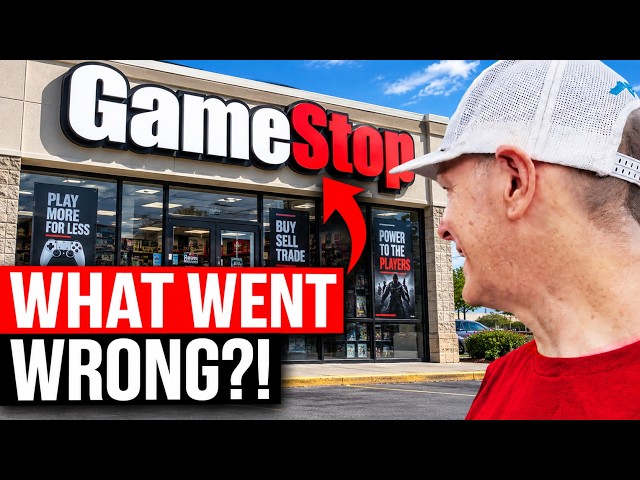
Cracked the used game model with 50% margins versus 20% on new games. Information asymmetry let them control pricing when customers had no internet data. The FuncoLand acquisition unlocked the flywheel: sell new, buy back used, resell with fat margins.
What Changed
Digital storefronts on PS4 and Xbox One let gamers download directly from consoles. Steam and others had been chipping away for years, but 2013 was the inflection point. GameStop's DNA was physical retail — they tried digital pivots (Impulse, Congregate, ThinkGeek, even AT&T wireless stores) but couldn't execute. Then they squeezed customers with high-pressure upsells, alienating the gamer base that had once defended them.
Where it Landed
Revenue down 70% from peak to $3.6B. Store count slashed from 7,500 to 2,200. The retail business loses money. Most profit comes from interest on a $4.6B cash war chest — built by selling stock during meme rallies. Now owns Bitcoin and tried to buy eBay. It's a meme-fueled holding company with a dying retail chain attached.
The Principles
1.
Information asymmetry is temporary. GameStop's pricing power on used games vanished the moment customers could Google values. Moats built on opacity don't survive the internet.
2.
DNA matters more than vision. Leadership saw digital coming and tried pivots for 15 years — all failed. A company built for physical retail couldn't rewire itself for digital, no matter how many acquisitions they made.
3.
Memes can become balance sheets. Cohen turned Reddit chaos into $4.6B cash by selling stock into rallies. Financial alchemy: internet sentiment → stock mania → real capital. Wild, but it happened twice.
Builder's Takeaway
If you're managing a legacy business under digital threat:
•
Squeezing customers accelerates the death spiral — GameStop's high-pressure tactics torched goodwill
•
Half-baked pivots waste capital — pick one transformation bet and staff it properly
•
When the market gives you a gift, take it — Cohen sold stock into insanity and banked billions