← Back to all One Page Business Stories

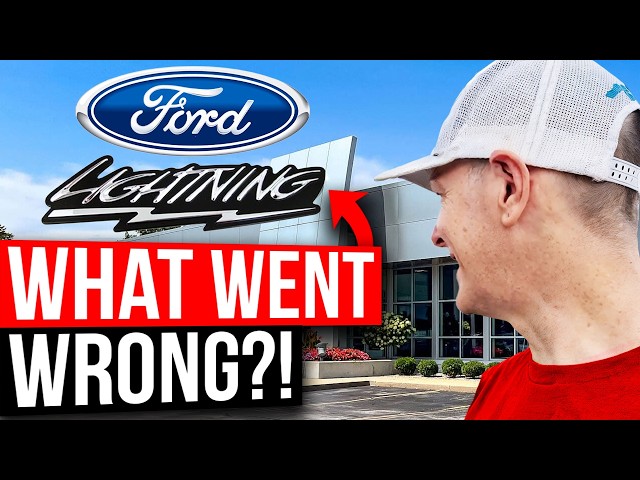
The rise and fall of the Ford F150 Lightning

Over 200,000 reservations in 2021, then a $19.5 billion write-down just four years later — killed by physics, not demand.

By The Numbers

200,000+
reservations at launch
$132,000
loss per vehicle sold
$19.5B
write-down at cancellation

What They Nailed Early

Ford read the threat correctly. Tesla's $700B market cap scared legacy automakers into action. The Lightning launched with impressive specs—560 horsepower, sub-4-second 0-60, and a promised sub-$40K price that generated massive pre-orders.

What Changed

COVID wrecked the economics. Battery costs spiked 400% in one year, shipping costs jumped 10x, and the base price soared from under $40K to $61K in six months. Then reality hit: batteries performed poorly in cold weather, range collapsed when towing, and the truck weighed a ton more than gas versions while towing less.

Where it Landed

Program canceled December 2024. $19.5B write-down. Hybrids now outsell Lightnings 10-to-1. Ford pivoting to range-extended EVs with engines included.

The Principles

1. 
Revealed preference beats stated intent. 200,000 reservations at $100 deposits don't equal real buying commitment when prices jump 50% and physics don't cooperate.
2. 
Unit economics can't be wished away. Losing $132,000 per truck means the math and physics aren't working—heavier batteries need more batteries, creating a doom loop.
3. 
Know your customer's edge cases. Truck buyers don't buy for daily use—they buy for what it might do. If it can't tow a camper 300 miles, it's not a real truck.

Builder's Takeaway

If you're building hardware at scale, remember:
• 
Test real behavior, not survey intent—$100 deposits reveal hype, not commitment
• 
Physics and algebra both have to work—you can't scale if unit economics bleed cash
• 
Solve for the edge case your customer cares about, not average daily use
Want the whole story? → Watch this on YouTube