← Back to all One Page Business Stories

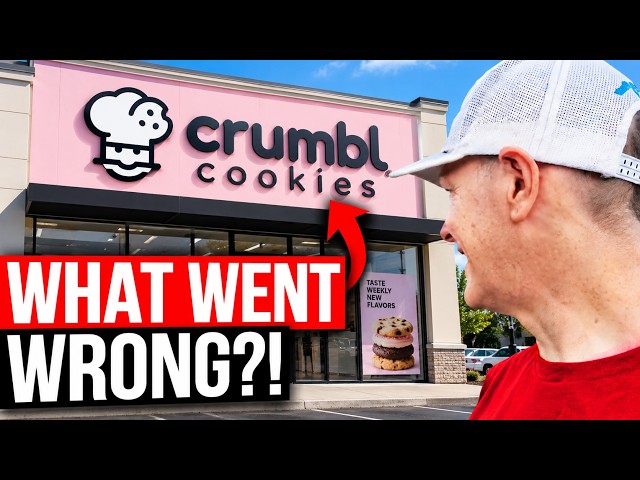
The rise and fall of Crumbl Cookies

A cookie chain hit 1,000 stores in 7 years doing $1.8M per location — then 20 stores closed in one week.

By The Numbers

$1.8M
per store at peak
$77K
franchisee take-home pay
20+
stores closed one week

What They Nailed Early

Built cookies like a tech startup: AB tested recipes, created Instagram-perfect pink boxes, and weaponized FOMO with rotating weekly menus. The viral flywheel worked — lines wrapped around buildings.

What Changed

COVID money dried up. The novelty engine that required constant escalation hit a wall — you can only make cookies so over-the-top before they stop tasting good. Franchisees mortgaged homes to open stores just as cannibalization kicked in and the hype reversed.

Where it Landed

Over 20 stores closed in a single week in 2026. Sales down 14% to $1.14M per location. Private equity bought in at $2B valuation. Franchisees who borrowed against their homes are getting wiped out.

The Principles

1. 
FOMO requires infinite escalation. When your brand depends on novelty, you need endless runway to keep topping yourself or the engine reverses.
2. 
Franchisee-franchisor misalignment kills. They profit on revenue, franchisees on profit. When growth cannibalizes unit economics, someone loses — and it's not headquarters collecting 8% off the top.
3. 
Vitamins lose when budgets tighten. A $6 cookie isn't lunch — it's discretionary. When inflation hits, painkillers survive and vitamins get cut.

Builder's Takeaway

If you're building a hype-driven brand, watch for:
• 
Novelty fatigue — the same trick stops working and reverses fast
• 
Unit economics under cannibalization — more locations can mean less per store
• 
Recession exposure — discretionary treats die first when wallets tighten
Want the whole story? → Watch this on YouTube

More One Page Business Stories:

More